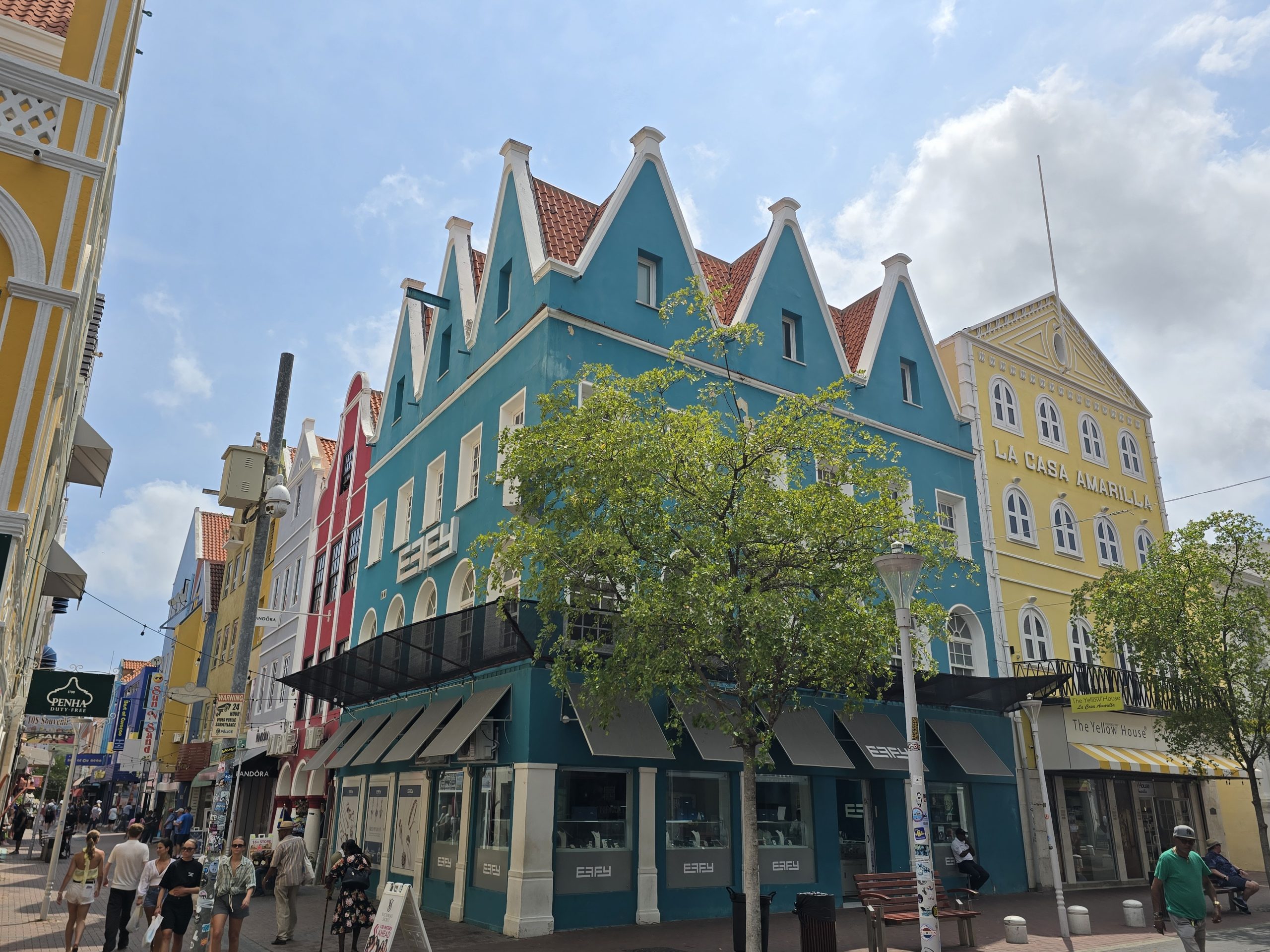
Curaçao includes the main island of Curaçao and the much smaller, uninhabited island of Klein Curaçao (“Little Curaçao”).[12] Curaçao has a population of 158,665 (January 2019 estimate),[2] with an area of 444 km2 (171 sq mi); its capital is Willemstad.[12] Together with Aruba and Bonaire, Curaçao forms the ABC islands.[13][14] Collectively, Curaçao, Aruba, and other Dutch islands in the Caribbean are often called the Dutch Caribbean.[14] It has the largest area of the ABC islands.[13] as well as in terms of population,[14]
The island’s name “Curaçao” may originate from the indigenous autonym of its people; this idea is supported by early Spanish accounts referring to the inhabitants as Indios Curaçaos. Curaçao’s history begins with the Arawak and CaquetioAmerindians; the island becoming a Spanish colony after Alonso de Ojeda‘s 1499 expedition. Though labelled “the useless island” due to its poor agricultural yield and lack of precious metals, it later became a strategic cattle ranching area. When the Dutch colonized the island in 1634, they shifted the island’s focus to trade and shipping, and later made it a hub of the Atlantic slave trade. Members of the Jewish community, fleeing persecution in Europe, settled here and significantly influenced the economy and culture.
British forces occupied Curaçao twice during the French Revolutionary and Napoleonic Wars but it was returned to Dutch rule. The abolition of slavery in 1863 led to economic shifts and migrations. Dutch remains the official language, though Papiamentu, English, and Spanish are widely spoken, reflecting the island’s diverse cultural influences.